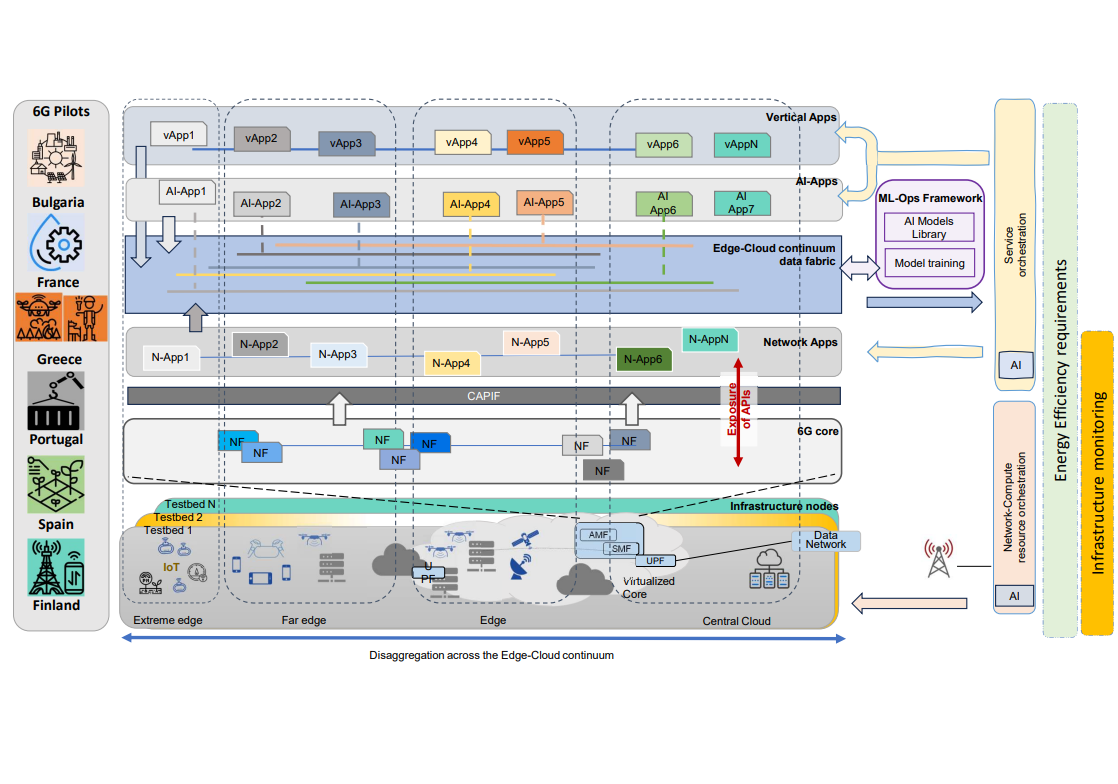
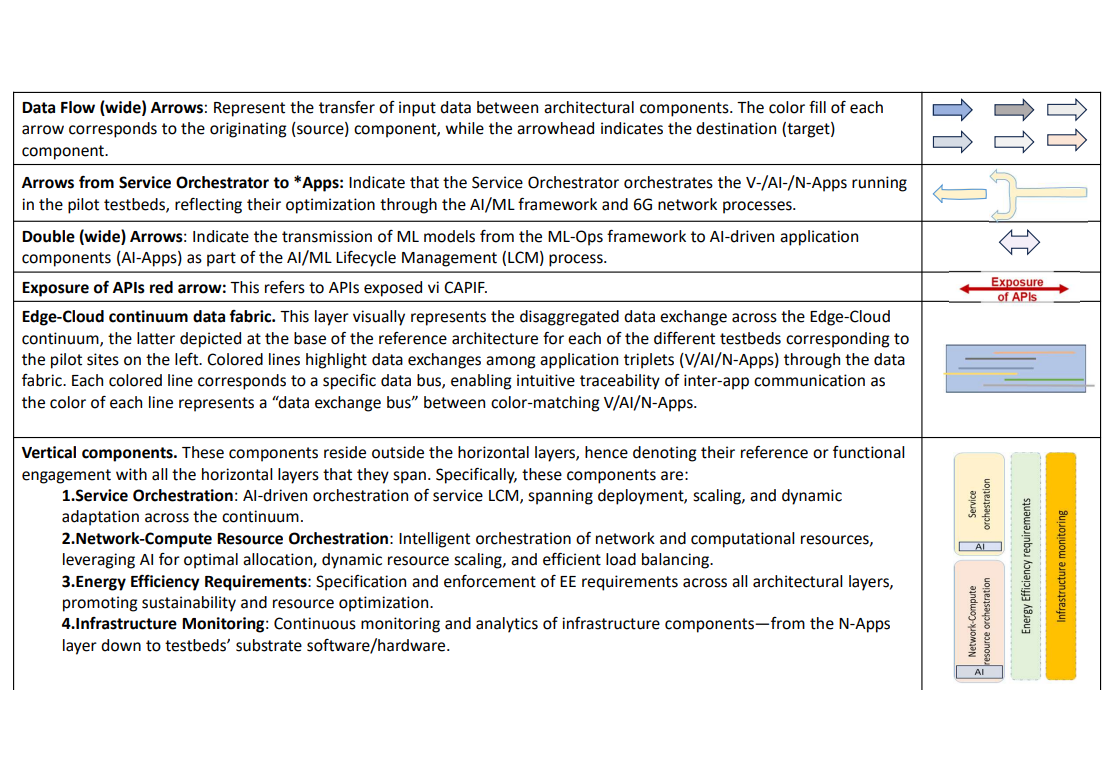
The 6G-VERSUS reference architecture presented here is designed as a layered and modular framework, supporting the transformation of conventional applications into 6G-native services while ensuring programmability, AI-driven intelligence, and energy efficiency. It is important to clarify that the term reference architecture denotes a common architectural foundation that each testbed will adopt and adapt in accordance with the specific requirements of its local UC(s). This approach provides an architectural coherence across the project while allowing the necessary flexibility in implementation based on testbed capabilities, vertical demands, and deployment conditions. The architecture itself promotes modularity, interoperability, and integration of AI across layers, enabling intent-based operations where verticals define service objectives—such as energy efficiency or latency targets—and the system dynamically reconfigures available resources to meet them. Interfaces are exposed for real-time and workload-aware allocation of compute, storage, and network assets, allowing for efficient orchestration tailored to each trial environment.
WordPress and our website use cookies to ensure that we give you the best experience. If you continue to use this site we assume that you are happy with it.